7 September 2026
Best ward for Kyoto monthly apartments (tradeoffs, not a ranking)
Kyoto monthly apartment wards as tradeoffs: Nakagyō, Shimogyō, Minami, Ukyō, and Fushimi against bath layout, budget, and start-date gates — no “best ward” slogan, just constraints that usually bind.

There is no single best ward for Kyoto monthly apartments. Foreigners who hunt マンスリー stock usually stack hard gates — バス・トイレ別 (separate bath and toilet), move-in date, budget band, furnished expectations, eligibility — and then discover that central wards fail the stack first. This page is a tradeoff map for 中京区 Nakagyō, 下京区 Shimogyō, 南区 Minami, 右京区 Ukyō, and 伏見区 Fushimi. Not a ranking. Not a lifestyle slogan.
Midstay’s Kyoto board (multi-provider discovery, letter in your name) is in private testing — public signups aren’t open yet, and the public board is still coming soon. Until then, run the hunt across operators yourself. Updates: midstay.app.
The constraint stack that usually binds
Before you pick a ward, write down what you will not compromise:
| Gate | Why it bites in Kyoto monthly stock |
|---|---|
| Separate bath / toilet | Many cheaper 1K units are 3-in-1 unit bath |
| Early move-in | Peak seasons fill; calendar Open ≠ hold |
| Central walkability | Nakagyō / Nishiki-close demand is high |
| All-in budget | Tease rent ≠ quote (fees, utilities ¥/day) |
| Eligibility | Tourist-not-OK units waste inquiries |
| Furnished now | Furniture-after-contract is a different product |
If you keep all four of “Nakagyō + BT別 + early start + mid budget,” something usually fails. Loosen one gate on purpose instead of refreshing the same search for weeks. For product/duration path, see Japan monthly apartments in Kyoto.
Ward tradeoffs (category-level, not a scoreboard)
Wards are tradeoffs — bath layout, budget, and start date usually bind before slogans do.
中京区 Nakagyō
Often chosen for: walkability, Karasuma-Oike / Sanjo / Nishiki-adjacent life, shorter trips across the city core.
Often costs you: higher all-in, fewer BT別 units at mid budget, harder early move-ins in busy months.
Ask in writing: exact station walk minutes (listing copy is marketing), bath layout from floor plan photos, eligibility for your status.
下京区 Shimogyō
Often chosen for: Kyoto Station west access, slightly easier stock than core Nakagyō for some date ranges, still city-usable.
Often costs you: noisier corridors near the station; “close to Kyoto Station” can mean different walks depending on the block.
Ask in writing: which side of the station, night noise expectations, whether the unit is truly BT別.
南区 Minami
Often chosen for: lower tease prices relative to central wards, Inari / Fukakusa-adjacent options depending on listing mix.
Often costs you: longer trips to Nakagyō-core errands; train/bus time becomes part of daily life.
Ask in writing: commute time to the places you will actually go weekly — not a tourist map pin.
右京区 Ukyō
Often chosen for: quieter residential feel, occasional better size or bath layout for the money.
Often costs you: west-side travel time into downtown; fewer “stumble into Nishiki” evenings.
Ask in writing: nearest station reality, grocery / pharmacy access, whether Wi-Fi and utilities are packaged.
伏見区 Fushimi
Often chosen for: budget headroom when central stock is gone.
Often costs you: distance from city-core rhythm; many hunters skip if they want daily downtown life.
Ask in writing: whether the all-in savings survive after transport time and whether the operator accepts your status and dates.
Station walk minutes, building year, and autolock claims belong on your verify list — not as trust-the-card facts.
How to use wards without a “best of” list
- Fix bath layout and eligibility first (they reject units independently of ward).
- Fix move-in / move-out and treat calendars as leads only.
- Pick a primary ward and one backup ward you would actually accept.
- Compare all-in quotes (rent band + 初期費用 + utilities + cleaning + rentals) for the same night count — see hidden fees.
- Do not reopen the ward debate every time a single inquire fails; change one gate deliberately.
- Re-check fee tables when dates shift — a new start date can change tier band and campaign eligibility.
Example tradeoff moves (illustrative, not advice)
| If this gate fails… | A common deliberate loosen… |
|---|---|
| No BT別 in Nakagyō for your dates | Keep BT別; move primary ward to Shimogyō or Minami |
| Early start impossible centrally | Keep ward; slip start date; keep searching cancels |
| All-in too high after quote | Keep location; accept smaller size or older building year |
| Tourist-not-OK on favorite card | Keep status honest; filter eligibility before more inquires |
Cross-links when you are fee-shopping: deposit, key money, furnished checklist.
What Midstay does (and does not) do here
Midstay will aggregate Kyoto weekly/monthly discovery with eligibility labels on the free board. Midstay is not the landlord. Operators confirm bookings. Approve-to-send inquire goes out in your name when you use that flow. Payment stays on operator rails. Private testing now; public board still coming soon.
That matters for ward shopping because the good BT別 unit for your dates may live on a Japanese-only operator page or aggregator card. The job is multi-provider discovery through confirmed booking — not picking a ward slogan.
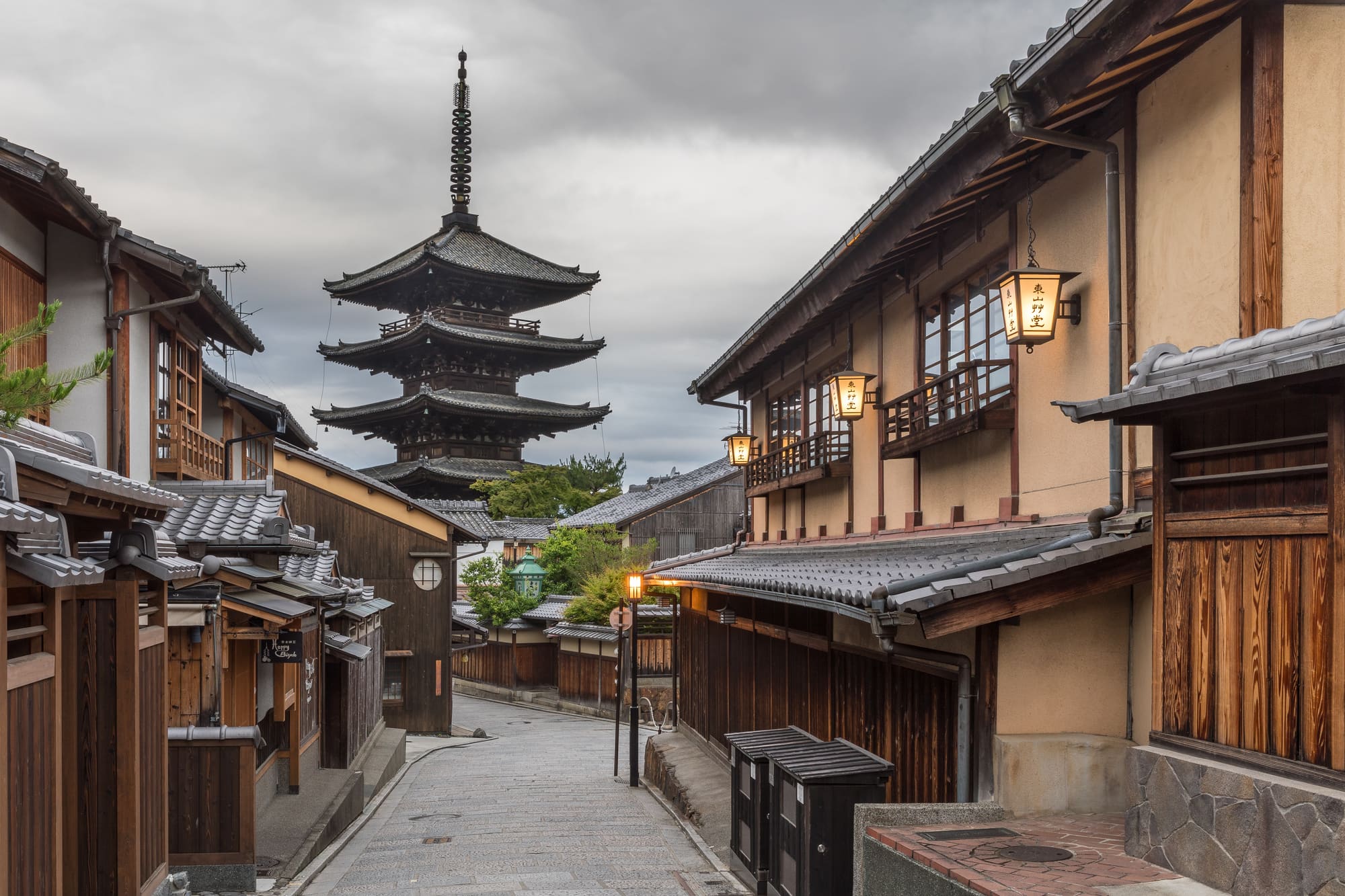
Photo: Basile Morin / CC BY-SA 4.0
Product and duration before the ward slogan
For ~30 nights, pick the housing product first (monthly mansion vs weekly vs hotel monthly vs sharehouse) — then the ward. Duration bands (ウィークリー / ミドル / ロング) and minimum-stay rules change the economics. For the product/duration path (search → inquire → quote → pay), see Japan monthly apartments in Kyoto for foreigners. This page stays on ward tradeoffs.
Soft next step
Midstay is in private testing. Public signups aren’t open yet, and the public board is still coming soon. Midstay is not the landlord — you pay the operator directly for rent and keys. When the board opens, the path stays: Japanese letter in your name → quote → pay operator. Updates: midstay.app.