7 September 2026
Weekly and monthly mansion hidden fees in Japan: tease price vs all-in
How to rebuild an all-in weekly or monthly mansion total in Japan: utilities ¥/day, cleaning, Wi-Fi rental, initial fees, and duration bands that make the tease price look cheaper than it is.

A ウィークリーマンション (weekly mansion) or マンスリーマンション (monthly mansion) card often shows a friendly “from ¥X” number. That number is usually a tease — a marketing floor for rent or a nightly equivalent — not your verified all-in for a concrete night count. Foreigners hunting mid-term stays in Japan (including Kyoto) lose weeks when they compare tease prices across operators without normalizing the same fee stack.
This page is a line-item checklist. No invented averages. Treat amounts as often / typically / ask in writing.
Midstay’s Kyoto board (multi-provider discovery, letter in your name) is in private testing — public signups aren’t open yet, and the public board is still coming soon. Until then, run the hunt across operators yourself. Updates: midstay.app.
Start from night count, not the card price
Build every comparison as:
All-in for N nights = rent for your band + 初期費用 + utilities for N + cleaning + optional rentals − campaigns
Then divide by N only if you want a nightly after the fact. Do not start from a nightly tease and reverse-engineer.
Weekly products are especially sensitive to ¥/day utilities and fixed cleaning, because fixed costs amortize poorly over short stays. A 10-night stay and a 40-night stay on the “same” unit are different products economically.
The line items that usually matter
Utilities billed per day, cleaning, and Wi-Fi rental are what blow the tease nightly price.
1. Utilities / 光熱費 (often ¥/day)
Many weekly/monthly operators bill electricity, gas, and water as a per-day amount rather than a flat monthly. On a short stay, that line can rival a chunk of rent. On a longer monthly band, it still matters but amortizes differently.
Ask:
- Included or itemized?
- ¥/day × nights or flat monthly?
- Cap / seasonality / AC-heavy summer rules?
- Who reads the meter if billed actuals?
2. Cleaning / 清掃費
Often a fixed yen amount at move-out or bundled into initial fees. Not the same as 敷金 (see deposit guide). Not the same as 礼金 (see key money guide).
Ask whether cleaning is charged even on early exit, and whether “spotless on arrival” photos imply a higher restoration standard.
3. Wi-Fi rental
“Internet available” ≠ free Wi-Fi. Some packages include it; others rent a router by the day or month. Confirm device, speed claims, wired LAN options, and whether multiple devices are allowed under the plan language.
4. 初期費用 / initial fees
Admin, linen set, key issuance, insurance-like add-ons, “contract fee.” On weekly products these can be a large share of a short stay’s total. Get the PDF or email table. If the English page shows one number and the Japanese fee table shows five rows, trust the table until the operator reconciles them in writing.
5. Short-stay premiums and tier bands
Operators often price ウィークリー / ミドル / ロング differently. A 9-night stay may sit on the expensive weekly tier; a 45-night stay may unlock a middle band. The tease “from” price on the card may assume the longest, cheapest band you do not qualify for.
6. Campaigns with end dates
Early-bird or seasonal discounts are real — and temporary. A quote that includes a campaign should state the campaign name and end date. Do not assume the same discount on a re-inquire two weeks later. Date shifts can drop you out of a campaign silently.
7. Optional rentals that become “required” in practice
Bedding refresh, vacuum, bicycle parking, delivery box access — some are truly optional; some are practically required for a livable month. Mark them optional vs required in your sheet so you do not under-count.
A comparison table you can reuse
| Line item | Tease card | Verified quote | Notes |
|---|---|---|---|
| Rent band for *your* nights | “From ¥…” | Exact | Weekly vs middle vs long |
| Initial fees | Often buried | Exact | Non-refundable usually |
| Utilities | “Included?” badge | ¥/day or flat | Multiply by nights |
| Cleaning | Missing | Exact | Fixed cost |
| Wi-Fi | “Available” | Included / rental | Device details |
| Other rentals |
Tease vs verified (operator truth)
| Signal | Treat as |
|---|---|
| Card “from ¥X” | Tease |
| Aggregator list price | Still not your quote |
| Operator email / PDF | Verified for a validity window |
| Old forum number | Stale range hint only |
| Friend’s total from last year | Different dates, campaigns, and rules |
Calendar Open on a website is not a hold. Quotes expire. Trust the operator email over the card.
Kyoto-specific habits that save money (process, not slogans)
- Keep one email and identical dates/status on every inquire across English and Japanese operators
- Normalize バス・トイレ別 (separate bath and toilet) vs 3-in-1 before you fall in love with a cheap tease
- Ask eligibility up front (tourist-OK vs not) so you do not pay attention (or application time) to a quote on a unit you cannot book
- Rebuild all-in for your night count every time a date shifts
- When two quotes look close, prefer the one with a clearer fee table over the one with a prettier photo
Midstay is not the landlord; operators confirm bookings. Free board listings carry eligibility labels. Approve-to-send inquire (when you use it) goes out in your name.
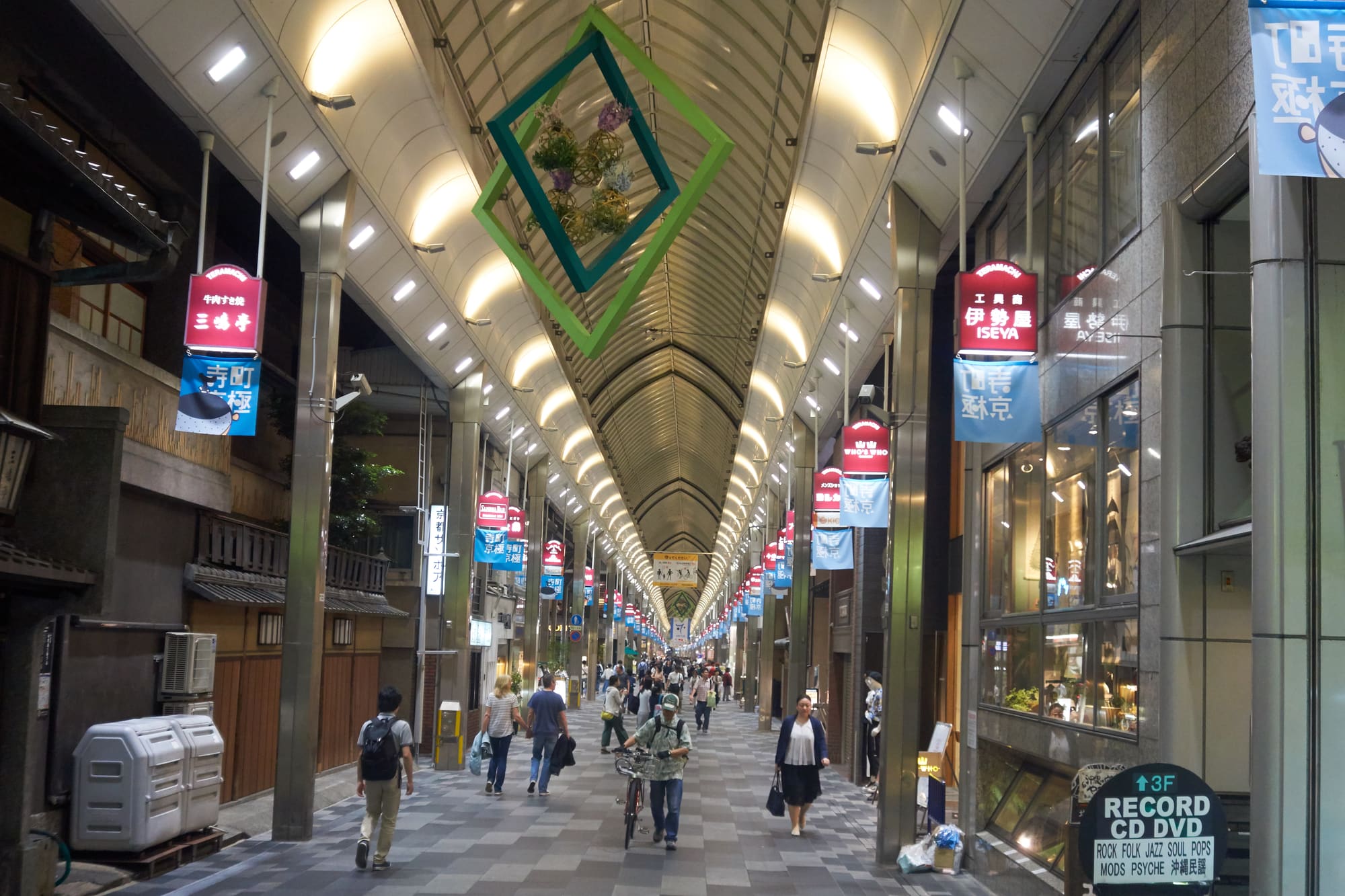
Photo: Celuici / CC BY-SA 3.0
Weekly and monthly: same fee stack, different amortization
The same line-item checklist applies to ウィークリー and マンスリー products. Weekly stays are especially sensitive to ¥/day utilities and fixed cleaning because fixed costs amortize poorly over short nights. Monthly bands (ミドル / ロング) change the rent row — but tease “from ¥X/month” is still not your all-in.
Tease vs all-in (weekly or monthly)
Card “from ¥X” = marketing floor (often the longest, cheapest band). Aggregator ウィークリー / ミドル / ロング bands = list prices until the operator confirms your dates. Operator email/PDF = verified quote for a validity window. Never paste a tease into a plan as if it were your personal all-in.
Tax-in vs tax-excluded presentation differs by operator — ask which total is payable. A quote without a validity line (有効期限) is incomplete; re-ask if your decision date sits past the window.
Soft next step
Midstay is in private testing. Public signups aren’t open yet, and the public board is still coming soon. Midstay is not the landlord — you pay the operator directly for rent and keys. When the board opens, the path stays: Japanese letter in your name → quote → pay operator. Updates: midstay.app.